
The poodle breed
The poodle comes in 3 sizes but all have the same basic temperament. They are very fond of humans and want to please their owners. They are sensitive to your emotions and will be quietly supportive if you are ill or upset. They are extremely intelligent, playful and active. A daily walk is essential for them and they need toys to stimulate them mentally or they will invent things to do and get into mischief! They are not aggressive but make excellent watchdogs. It’s very rewarding to teach a poodle as they learn very quickly. They are great with kids and other pets. It’s a strange fact but a poodle also has excellent manners.
History of the poodle
The poodle has a very impressive history which is presented in great detail in a video by the AKC (American Kennel Club). The AKC is a trusted source of accurate data about all breeds of dogs and first recognised the poodle breed in 1887.
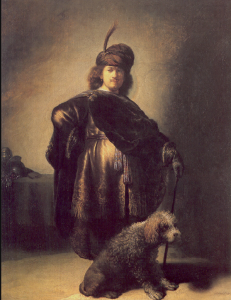
Although often referred to as a French poodle, this dog originated in Germany hundreds of years ago and has been frequently represented in various European artworks ever since. Poodles were the duck hunters’ friends, retrieving shot birds from waterways. Their traditional elaborate cut was designed to maximise their comfort in icy cold water and most poodles today still enjoy the water.
However, poodles are very versatile, as their history reveals. They have even served in the military in various ways. Poodles are famous in the entertainment industry too and also make great watchdogs. In France, they were trained to search out truffles.
Today, they are frequently used as therapy dogs. Poodles are the ideal choice for this task because they prefer the company of humans and are very easy to train.
Oodles of poodles

Poodle cross-breeds are very fashionable and there are oodles of them available today. In the USA, the labradoodle or goldendoodle dominate, being combinations of the poodle with the labrador or the golden retriever respectively.
In Australia, the current winner is the cavoodle, a small dog that is a cross between a cavalier King Charles spaniel and a miniature or toy poodle. Cavaliers are a British breed of dog with long silky hair, droopy ears and a broader face than the poodle. They are great pets – playful and patient but with a tendency to shed.
There are good reasons why the poodle is a popular choice for breeders creating hybrids today. They do not shed so there is a lower risk of allergic reactions to them, they rank highly as one of the most intelligent breeds and they are beautiful to look at. Add to that a mischievous personality and a friendly nature and you’ve hit the jackpot. But you could ask, why mix it with any other breed?
What is the smartest dog?
If you Google “intelligent dogs”, you’ll find the poodle close to the top of any list, usually following the border collie. You only need to spend 5 minutes with one of these dogs to realise you are in the presence of lively, observant animals. Bright dogs are energetic and eager to please. They love to learn too.
Poodles are highly intelligent and therefore easy to train. This means you can train them to do what you need them to do fairly easily, including fetching, sitting, toiletting outside, “staying” waiting and generally learning where they fit into the group they have become part of. They make excellent working dogs, as well as family pets, and many tasks can be mastered with far less effort than it can take with other breeds.
You will notice this very early with your puppy. Poodles are keen to cooperate and quick to understand what you are trying to teach them.
The poodle temperament

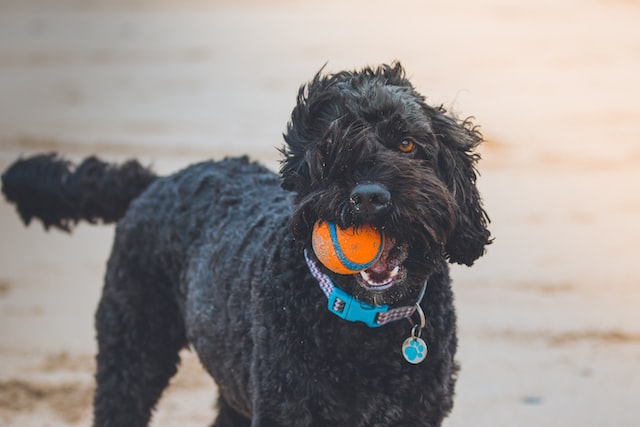
Poodles are interested, playful, responsive and energetic pets. They love solving problems and are smart enough to adjust their behaviour to the one they have attached themselves to – and they can be choosy in a family. But the main thing to know about them is that they crave human company and cannot be left alone for long periods without becoming anxious. There is sustained excitement for a few minutes on your return.
Like all dogs, they need daily exercise to maintain their contentment. A daily 40-minute walk or 2 shorter ones is enough and they always respond well to fetching balls. They LOVE chewing pigs’ ears and playing with squeaky toys – it makes them think they are talking!
If exercised, poodles are ideal companions for people who live in apartments. If they get your attention often enough during the day, they are easy-going dogs. So, if you are going to be away for 8 hours every day, a poodle is probably not the right choice for you.
Non-shedding coat
Most dogs shed hair which results in balls of fluff adhering to upholstery and/or carpet or forming little balls on tiled or wooden floors. This requires regular sweeping or vacuuming and can be a health hazard. From this point of view, a poodle is a low-maintenance indoor pet. The coat is the most distinctive aspect of the appearance of a poodle. It is hairy to start with and as the dog matures, the coat develops the tight curls for which it is famous. The coat comes in a variety of colours – black, white, apricot, red, chocolate, grey and parti-coloured, which usually consists of patches of brown and white. Grooming the coat into various shapes adds diversity of presentation, ranging from extreme contrasts between bald patches and hairy outcrops to a smoother, more rounded look.
Occasionally, you may get a few tufts if you comb the poodle’s coat indoors and remove knots but generally, there is no moulting.

Is the poodle coat really hypoallergenic?

Some people are allergic to dogs. Whereas this allergy is a reaction to the dog’s urine, saliva, hair and dander, it is this last one which accounts for up to 75% of sufferers. Dander refers to dead skin cells which are shed through the coat of the dog and it is the protein in these cells that triggers the allergic reaction.
It is claimed that the coat of all poodles, whether standard, miniature or toy, is hypoallergenic, which means it is unlikely to irritate people who suffer from an allergic reaction to dog hair. This is because of the low level of dander that they shed. However, no dog is completely safe for all such people, so this is a relative aspect.
The only way to tell if a poodle will trigger an allergic reaction in a vulnerable person is for him or her to spend enough time with the poodle to find out whether the dander level is low enough for the individual’s comfort. But there is a greater chance of a minimal allergic reaction to poodles compared with other breeds.
If there is someone in the house who is allergic to dogs, it’s advisable to brush your poodle outdoors, just in case!